

Why Choose Us
Accept ODM/OEM service
There are more than 30 product categories, covering construction, decoration, advertising display, packaging, industrial manufacturing, etc., and ODM and OEM services can be provided.
One-stop Solution
We have a complete quality supervision and after-sales service system, which can provide you with a one-stop high-quality product supply service experience.
Professional Team
We have a standardized management system, experienced staff and professional technical team.
Fast delivery
HONTOP has more than ten production bases in China, which can guarantee fast delivery.
What is Solid Polycarbonate Sheet
Solid polycarbonate is one type of polycarbonate characterized by a solid, flat, and transparent surface, commonly compared to glass. Its design capability is suitable for modern houses, if you want to create a space with comfortable lighting. It is as stylish as it is strong and rigid, for a long-lasting skylight roofing.Solid polycarbonate is a great option if you want to utilize a space for other purposes. Not only does it raise the value of your home, it also makes room for functional spaces like greenhouses, carports, conservatory, terraces, and canopies.




Benefits of Solid Polycarbonate Sheet
Strength and Durability
One of the top features of solid polycarbonate sheets is its strength and durability. These sheets are 200 times stronger and virtually unbreakable when compared to regular glass, which makes them the perfect choice for safety and security applications. Due to its durability, it can withstand extreme weather conditions, including impact from hailstones, which can be destructive to some roofing materials.
Energy Efficient
Solid polycarbonate sheets are energy-efficient, as it helps to regulate temperature control while reducing solar heat gain by reflecting heat from the sun away from your building, in most cases, this amounts to a 30% reduction in energy costs.
UV Resistance
The sun's UV rays can be harmful to some materials, causing fading, discoloration, and brittleness. Solid polycarbonate sheets are UV-resistant, making them suitable for use in outdoor applications. UV resistance ensures that these sheets do not become brittle over time due to exposure to sunlight.
Lightweight
Solid polycarbonate sheets are lightweight, which makes them easy to transport and install, reducing installation time and cost. They weigh less than glass, making installation less labor-intensive.
Design Flexibility
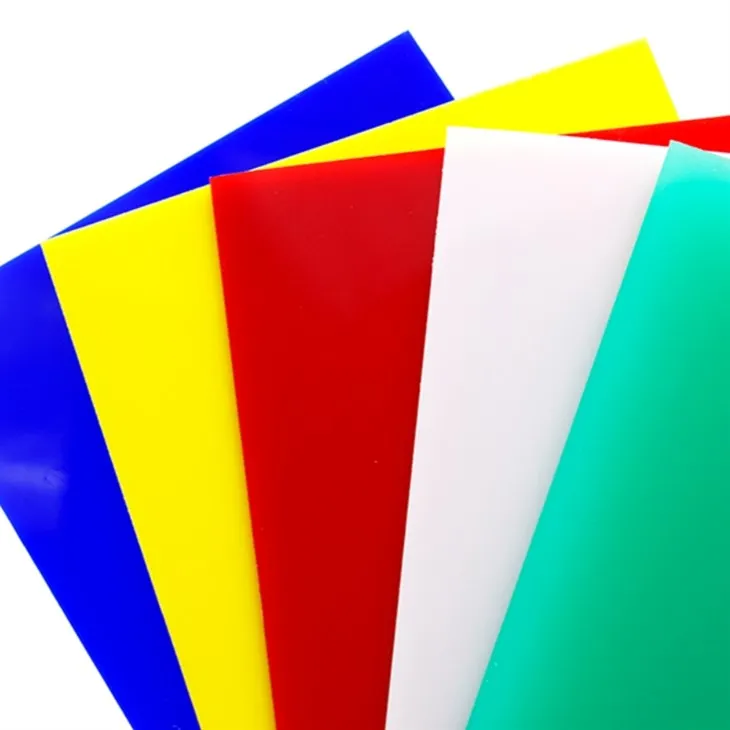
Solid polycarbonate sheets are versatile and can be fabricated into different shapes and sizes that accommodate different building designs. The range of colors available allows for a variety of design options, ensuring that you get the perfect aesthetic to match your building.
Types of Solid Polycarbonate Sheet
Clear Solid Polycarbonate Sheet
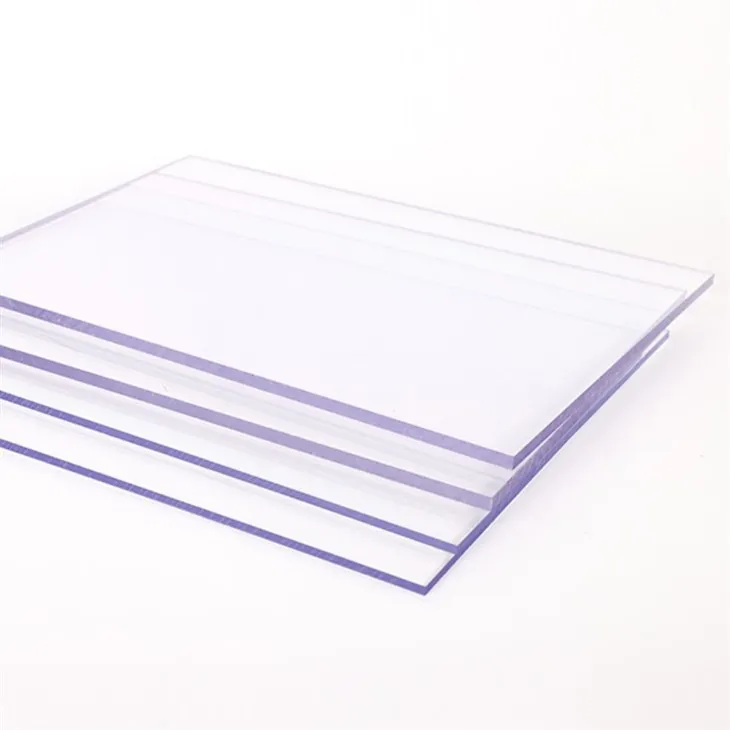
Welcome to our Clear Solid Polycarbonate Sheet page! We offer high-quality clear solid polycarbonate sheets, providing a reliable solution for your projects. Whether you're looking for durable building materials, high light transmission alternatives, or creative design elements, we have you covered.
Frosted Polycarbonate Sheet
Welcome to our Frosted Polycarbonate Sheet page! We take pride in offering high-quality frosted polycarbonate sheets, providing an ideal solution for your projects. Whether you're looking for exceptional light diffusion, durable building materials, or creative design elements, we have you covered.

Embossed Polycarbonate Sheet
Welcome to our Embossed Polycarbonate Sheet page! We pride ourselves on offering high-quality embossed polycarbonate sheets, providing versatile solutions for your projects. Whether you're seeking unique textures, enhanced light diffusion, or durable building materials, our embossed sheets are designed to meet your needs.
Prismatic Polycarbonate Sheet
Welcome to our Prismatic Polycarbonate Sheet page! We offer high-quality polycarbonate sheets with a prismatic surface texture, designed to enhance light dispersion and create a visually stunning illumination effect. Whether you're lighting up commercial spaces, architectural features, or signage displays, our prismatic sheets are the perfect solution for achieving optimal light diffusion and aesthetic appeal.
Application of Solid Polycarbonate Sheet
The daylighting ceiling of office buildings, department stores, hotels, villas, schools, hospitals, stadiums, entertainment centers, and public facilities
Polycarbonate sheet has high light transmission, especially the clear polycarbonate sheet. The light transmission can reach 90% which is a great choice for a skylight. Polycarbonate panels are high impact strength, real unbreakable. So it is often used for industrial and residential skylight roofs. It can resist wind and heavy snow. Clear and bronze solid polycarbonate sheets are preferred. Usually, people choose different thicknesses for roofing according to the requirements. 2-4mm solid polycarbonate sheets are an excellent choice for balcony, canopies roof.
Noise barriers of polycarbonate panels for expressways, railways, and urban elevated roads
Polycarbonate sheets have high noise resistance which much reduces 30f dB of noise. It is the best alternative among different types of soundproof optionsfor highway noise barriers. Besides, the transparent polycarbonate sheet can preserve visual views along noise proof barriers.
Anti-fog hollow polycarbonate sheet for greenhouses
Twin-wall anti-fog polycarbonate sheets are most popular in greenhouse covering. It is clear with high light transmission. Double polycarbonate sheets are durable, lasting 10-20 years. It can much save the cost compared to film greenhouse. Anti-fog polycarbonate panels prevent plants or flowers from condensation. Contact us for more greenhouse information.
Tough polycarbonate for swimming pool enclosure
As we know, a swimming pool enclosure creates a stable environment so that you can do exercise even during summer or cold weather. So the quality of the enclosure's material is important. Choose a polycarbonate sheet you will get one tough swimming pool enclosure. It is high strength resistance, lowest yellowing index, and is durable, lasting 10-20 years.
Bullet Resistance
Solid polycarbonate sheet has extreme impact resistance even can be used for bullet resistance. 15mm polycarbonate sheets help provide proper protection and security. It is more and more popular as it's unbreakable.
Panels of advertising light boxes and advertising display boards
Light diffuse polycarbonate sheet has better light transmission.It can relieve the spot light,reduce light pollution,soft and uniform light,good visual effect and the plate to scratches is not sensitive. Unique Plastic company is the top5 manufacturer of polycarbonate sheet. If you have any questions.please contact us.
Solid Polycarbonate Sheet Properties
Toughness
To qualify as a “tough plastic,” a material must be able to withstand a minimum amount of abuse without sustaining permanent damage. When polycarbonate is rated as a “tough plastic,” it means the material can endure minimal scratching, chipping, or cracking.
Impact Resistance
Impact resistance is the ability of a material to absorb energy from an impact and then safely disperse the energy throughout the material without transferring it to other parts of the material. When polycarbonate is rated as an impact-resistant material, it means the material can withstand a certain amount of impact without sustaining damage.
Cold Resistance
Polycarbonate is a thermoplastic with excellent cold resistance. This means it can withstand freezing and will return to its original shape when the temperature is raised.
Heat Resistance
For the most part, polycarbonate is a heat resistant material. The only time it is considered a heat transmission material is when it is used for below 90 degree application.
How to Choose Solid Polycarbonate Sheet
Check the Manufacturer
Ensure the polycarbonate sheets have a trademark, a specific factory address, and contact information clearly displayed. Avoid products lacking these details, as they may be of inferior quality.
Examine the Panel
High-quality sheets should have a light transmission rate of around 80%. If the sheets appear blurry or speckled, they may be made from recycled materials, not premium materials.
Look at the Material
Remove the protective film and inspect the sheets for impurities and particles. High-quality polycarbonate will be clear, indicating the use of new materials. Sheets that feel gritty or visibly impure are likely made from recycled materials and are of lower quality.
Inspect the Protective Film
The PE protective film on the sheet’s surface should adhere well without peeling. This is a sign of advanced manufacturing technology and stringent production standards.
Check for Flatness
The sheets should be perfectly flat, indicating thick walls and robust material usage that resists deformation. Wavy sheets may suggest poor manufacturing processes or thinner material.
Measure Thickness
Thicker walls mean higher material density and cost, reflecting better quality. Thicker polycarbonate sheets are more durable and provide better insulation.
Smell
High-quality polycarbonate should not emit any strong odors. An unpleasant smell could indicate the presence of impurities in the materials used.
Test Elasticity
High-quality sheets are elastic and should snap back to their original shape without creases after bending. Roll a sheet into a cylinder and then release it. If it retains significant warping or does not return to its shape, it may be made from recycled materials.
UV Protection Layer Test
Check for a UV protection layer. Without it, sheets can turn yellow or crack after just a few months of sun exposure. If standing under a sheet feels like direct sunlight, it likely lacks sufficient UV protection.
Solid Polycarbonate Sheet Size Guide
4mm
4mm sheets are the thinnest polycarbonate sheets available. These are usually used for greenhouse glazing, and occasionally point-of-sale boards for advertising.
6mm
6mm sheets are also commonly used for greenhouse glazing and point-of-sale boards.
10mm
10mm sheets are a popular choice of thickness for smaller carports and canopies. This thickness is a cost-effective solution that does the job very well, where the span required is not too large.
16mm
16mm sheets are again used for carports and canopies, though this thickness can cope with a larger span than the 10mm polycarbonate roofing sheets. Occasionally it can be used for small conservatories, though generally only in unheated areas.
25mm
25mm sheets give you a high-quality finish. This thickness is used in commercial projects, due to the calibre of these sheets, as well as for high-end domestic structures, such as conservatories, canopies, orangeries, or atriums.
35mm
35mm sheets were created for conservatory roofs. At this thickness, you can choose from a range of colours including a heat guard. This allows you to create a conservatory that is designed around the strength and position of the sun giving you a room that is usable throughout the year, as opposed to old-fashioned conservatories that were alternatively too hot or too cold!
How To Process Solid Polycarbonate Sheets ?
The punching process of the punch also has restrictions on the thickness of the polycarbonate panels material. Generally, it is suitable for polycarbonate panels materials within 1.5 mm, and the quantity is relatively large. Although polycarbonate panels materials with a thickness of 2mm or even thicker can also be stamped, in order to ensure dimensional accuracy, the cutting die will be frequently replaced, which greatly increases the cost. Therefore, if the polycarbonate panels material is thin and on top of the product, if the board is not thin, please compare before choosing stamping or engraving.
This technology is mainly for products with low processing requirements, mainly products with low precision requirements and conventional squares that do not require punching and chamfering. Generally, the cutting of sliding table serrations is now more used. Because it is a manual operation, the processing accuracy has a lot to do with the operator, and the general accuracy is controlled at about 0.5 mm. If the requirements are high, it can only be completed by CNC machining, the accuracy can be controlled at 0.02, and the edge is smooth without burrs, but the price is relatively high and the efficiency is not high, so currently single products generally choose saw tooth cutting.
Polycarbonate panels engraving is widely used. Especially after the polycarbonate panels is subdivided in the market, the shape and quality requirements of the products have been improved. Generally speaking, polycarbonate panels engraving processing can meet more needs. Many customers now think of engraving and processing polycarbonate panels first, which greatly saves costs.
There are two main types of bending: one is cold bending, generally 150 times its thickness can be used as the cold bending radius. However, for polycarbonate panels materials with anti-scratch layer, cold bending 175 times should be considered. If it is smaller, therm forming is recommended. Cold bending will produce a certain amount of deformation, and the magnitude of the deformation depends on the thickness of the plate.
How to wash Solid Polycarbonate Sheet
Start by eradicating debris : Whether people are washing a greenhouse, roof, or the rest of polycarbonate products, they should begin by cleaning any debris from the polycarbonate. This may encompass huge deposits of dirt or mud, pebbles, twigs, and leaves. By removing these more significant bits of rubbish, people will prepare polycarbonate for cleaning and ensure that nothing is left that could scratch the substance.
Rinse with warm water: When people begin to wash polycarbonate sheets, they should start with a rapid rinse. This guarantees the removal of visible dirt, making the washing procedure simpler in the longer term.
Clean with mild soap and warm water: Mix your soap and water in the bucket and clean the polycarbonate using a microfiber cloth or soft sponge to circumvent scratching the substance. Please remember to guarantee that the detergent contains no dangerous chemicals that can harm the polycarbonate sheet, like white spirits. Unlike acrylic plastic, ammonia will not break the polycarbonate sheet.
Change your sponge or water and thoroughly rinse: Clean the soap off and rinse the polycarbonate with warm water. People might need to follow these steps repeatedly if they have not cleaned polycarbonate for a period.
Dry with a soft garment : Please remember to dry the polycarbonate sheet with another soft garment to avert streaks and water spotting from forming on the polycarbonate. Therefore, it is not an excellent idea to clean polycarbonate if rainfall is taking place outside.
Check your sewer: People only need to check their gutter if they are cleaning a polycarbonate roof. However, they need to take this step after they have done cleaning. People might have led to blockage when removing the debris, and thus they need to unblock the gutter to circumvent overspill.
Our Factory
HONTOP was founded in 2019 and is headquartered in Haining, Zhejiang Province, China. We are committed to providing customers with one-stop supply to meet their ODM and OEM customization services.HONTOP company currently has two industrial departments, "HONTOP Plastics" and "HONTOP Decoration", which are respectively engaged in the international export trade business of plastic sheets and decorative materials.HONTOP employees always adhere to the development concept of "Growth & Accompany".
Our certificate


FAQ
We're professional solid polycarbonate sheet manufacturers and suppliers in China, specialized in providing high quality customized service. We warmly welcome you to buy cheap solid polycarbonate sheet from our factory. For price consultation, contact us.
cnc machining polycarbonate sheet, heat resistant polycarbonate sheet, medical device polycarbonate sheet