

Why Choose Us
Accept ODM/OEM service
There are more than 30 product categories, covering construction, decoration, advertising display, packaging, industrial manufacturing, etc., and ODM and OEM services can be provided.
One-stop Solution
We have a complete quality supervision and after-sales service system, which can provide you with a one-stop high-quality product supply service experience.
Professional Team
We have a standardized management system, experienced staff and professional technical team.
Fast delivery
HONTOP has more than ten production bases in China, which can guarantee fast delivery.
What is PET Sheet
A-PET sheet is a kind of polyester sheet produced by the process of dehumidifying, drying, melting, plasticizing, extrusion molding, and calendering and shaping using polyester as raw material.Since the polyester melt flows from the die of the extruder to the cooling roll, and is rapidly cooled on the cooling roll, the polyester rapidly changes from a viscous fluid state to a glass state, and the obtained polyester sheet is in an amorphous (non-crystalline) state. It is called A-PET sheet.
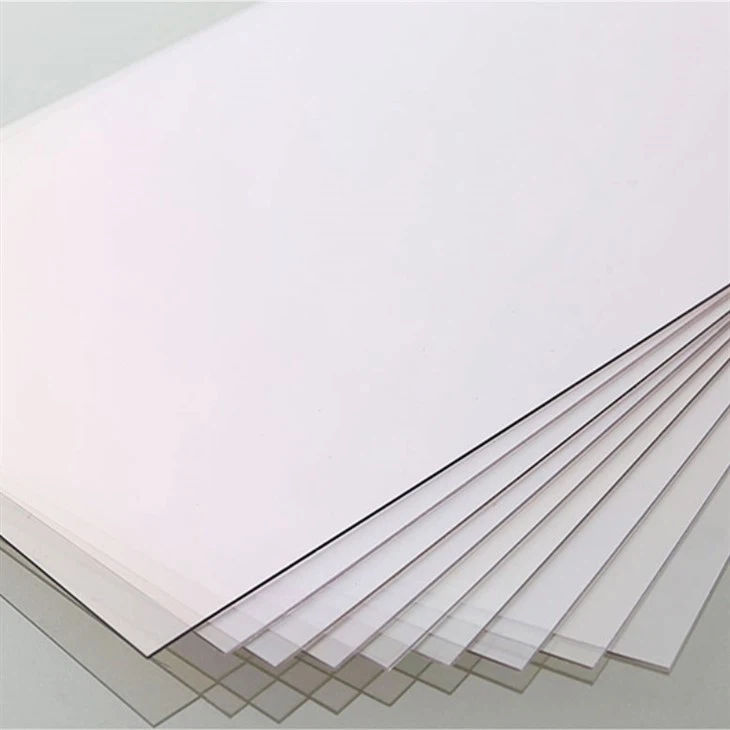


Lightweight and Strong
PET sheet is a lightweight material that is stronger than many other plastics, such as PVC and polystyrene. This makes it an ideal material for packaging applications, where a lightweight yet durable material is required to protect the product during shipping and handling. The strength of PET sheet also makes it suitable for use in displays and signs, where a rigid material is needed to hold the weight of the product.
Excellent Clarity
PET sheet has excellent clarity, which means that it allows light to pass through with minimal distortion. This makes it an ideal material for use in packaging applications, where the product needs to be visible to the consumer. PET sheet is often used in the production of clear plastic bottles, food containers, and blister packaging.
Good Barrier Properties
PET sheet has good barrier properties, which means that it can prevent gases, moisture, and other contaminants from passing through. This makes it an ideal material for packaging applications, where the product needs to be protected from external factors that can affect its quality or shelf life. PET sheet is often used in the production of food packaging, pharmaceutical packaging, and medical devices.
Recyclable
PET sheet is a recyclable material that can be reused to produce new products. This makes it an eco-friendly choice for packaging applications, where sustainability is a concern. PET sheet can be recycled into various products, such as fiberfill for pillows and mattresses, strapping material, and even new PET sheet.
Chemical Resistance
PET sheet has good chemical resistance, which means that it can resist the effects of many chemicals, such as oils, greases, and solvents. This makes it an ideal material for packaging applications, where the product needs to be protected from chemical contamination. PET sheet is often used in the production of packaging for industrial chemicals, automotive fluids, and household cleaners.
Good Temperature Resistance
PET sheet has good temperature resistance, which means that it can withstand high and low temperatures without degrading. This makes it an ideal material for packaging applications, where the product needs to be protected from temperature extremes that can affect its quality or shelf life. PET sheet is often used in the production of packaging for frozen foods, microwaveable meals, and hot beverages.
Types of PET Sheet
BOPET Film
Welcome to our BOPET Film page! Step into a realm of clarity, strength, and versatility with our premium biaxially oriented polyethylene terephthalate film. Engineered to meet the diverse needs of various industries, our BO-PET film stands out for its exceptional quality, performance, and reliability.
Metallized BOPET Film
Welcome to our Metallized PET Film page! Immerse yourself in a realm of elegance, durability, and versatility with our premium metallized polyethylene terephthalate film. Crafted to meet the diverse needs of various industries, our Metallized BOPET film combines the exceptional properties of BOPET film with the added glamour of metallization.
APET Film
Welcome to our APET Film page! Dive into the world of clarity, protection, and sustainability with our premium polyethylene terephthalate film designed specifically for packaging applications. Our APET film promises to enhance the visual appeal, durability, and environmental friendliness of your packaging solutions.
PETG Film
Welcome to our PETG Film page! Step into a world of clarity, flexibility, and resilience with our high-quality polyethylene terephthalate glycol film. Tailored to meet a variety of industry needs, our PETG film stands out for its exceptional quality, performance, and versatility.
Application of PET Sheet
Displaying: Our APET sheets are ideal for advertising display applications, providing clarity and protection to your products while displaying them effectively.
Printing: Its smooth surface and clarity make our APET sheet ideal for printing applications, ensuring vibrant and high-quality prints.
Medical: Our APET sheet is used in medical applications such as face shields and protective barriers due to its clarity, flexibility, and chemical resistance.
Automotive: Its strength and durability make our APET sheet suitable for automotive parts and components that require transparency and reliability.
What Are the Differences Between PE Sheet and PET Sheet?
Chemical Structure
The polymer PE is a repeating chain of ethylene molecules. PE’s chemical structure consists of carbon atoms and hydrogen atoms, and PE has the chemical formula (C2H4)n.PET is a polymer made from ethylene glycol and terephthalic acid. The chemical formula for PET is (C10H8O4)n, representing a repeating chain of monomers with carbon, hydrogen, and oxygen atoms.
Mechanical Properties
PE has mechanical properties that vary depending on its different forms, such as high-density polyethylene (HDPE) and low-density polyethylene (LDPE). HDPE is a durable, rigid material, while LDPE is soft and stretches more easily.PET is a sturdy, lightweight plastic that has a high strength-to-weight ratio, which is one of the reasons why it’s such a versatile and affordable material.
Clarity
PET is one of the most transparent plastics, making it suitable for water bottles and other types of clear packaging. PE ranges from opaque to transparent, depending on the density of the polymer.
Barrier Property
PET and PE are both good moisture barriers. PET has lower gas permeability compared to PE, so it’s better at keeping oxygen and carbon dioxide out, helping extend the shelf life of products with PET packaging.
Recyclability
PE and PET are both easy to recycle, but PET retains its original properties better than PE, even when it goes through recycling many times.
Applications
PET can be food packaging, polyester fibers, bottles, and microwavable containers. PE applications depend on the density of the plastic, but common uses are storage containers, plastic bags, drink bottles, and household items.
Cost
PET and PE are both inexpensive plastics with similar prices, but PE plastics can cost more. In 2022, HDPE cost $1,106 per metric ton, while PET cost about $950 per metric ton.

How to Choose PET Sheet
Thickness of PET Sheets
One of the main factors to consider is the thickness of the PET sheets. Thicker sheets tend to be more durable and offer better protection against impacts and burglaries. It is important to choose a thickness that is appropriate for the level of security you require. Thicker sheets also offer better insulation properties, helping to keep your home or business energy efficient.
Quality of PET Sheets
Another important factor to consider is the quality of the PET sheets. Look for sheets that are made from quality materials and have been rigorously tested to ensure their durability and strength. High-quality PET sheets are less likely to crack, warp, or fade over time, ensuring that your security door will last for many years.
Color of PET Sheets
In addition to thickness and quality, the color and finish of the PET sheets are also important. Security doors are often subject to harsh weather conditions and daily wear and tear, so choosing sheets with a UV-resistant finish will help prevent fading and discoloration. Additionally, choosing a color that complements your overall aesthetic and blends in well with the surroundings is important to maintain an overall look.
Compatibility
In addition, it is important to consider the installation process and compatibility with the security door frame. PET sheets should be easy to install and should fit securely within the door frame to provide the greatest level of security. It is recommended to consult a professional installer or manufacturer to ensure proper installation and compatibility.
Cost
Finally, consider the cost of PET sheet. While affordability is an important factor, quality cannot be compromised. Investing in high-quality PET sheet may cost more upfront, but it can save you money in the long run by reducing the need for frequent repairs or replacements.
Process of PET Sheet
Crystallization
PET Sheet are heated in a crystallization tower to arrange the molecules neatly, and then the glass transition temperature of the slices is increased to prevent adhesion and clogging of the hopper during the drying process. Crystallization is often an essential step. Crystallization takes 30-90 minutes and the temperature is below 149 °C.
Drying
At high temperatures, water hydrolyzes and degrades PET, resulting in reduced intrinsic adhesion, and its physical properties, especially impact strength, decrease with decreasing molecular weight. Therefore, before melting and extrusion, PET should be dried to reduce the moisture content, which should be less than 0.005%. Dehumidification dryer for drying. Due to the hygroscopicity of PET material, when water penetrates deep into the surface of the slice, molecular bonds are formed, and another part of the water penetrates deep into the inside of the slice, resulting in difficulty in drying. Therefore, ordinary hot air cannot be used. The hot air dew point is required to be lower than -40℃, and the hot air enters the drying hopper through a closed circuit for continuous drying.
Extrusion
PET is crystallized and dried and transformed into a polymer with obvious melting point. The polymer molding temperature is high and the temperature control range is narrow. Polyester special barrier screws are used to separate unmelted particles from the melt, which helps to maintain longer shear processes and increase extruder output. A flexible die with a streamlined throttle rod is adopted, and the mold head is tapered. Streamlined runners and scratch-free lips indicate a good finish. The mold heater has drainage and cleaning functions.
Cooling and forming
After the melt comes out of the head, it directly enters the three-roll calender for calendering and cooling. The distance between the three-roll calender and the machine head is generally kept at about 8cm, because if the distance is too large, the plate is easy to sag and wrinkle, resulting in poor plate finish. In addition, due to the long distance, heat dissipation and cooling are slow, and the crystals turn white, which is not conducive to calendering. The three-roll calendering unit is composed of upper, middle and lower rollers. The shaft of the middle drum is fixed. During the cooling calendering process, the roll surface temperature is 40°C-50℃. The shaft of the up and down rollers can be moved up and down.
Cleaning
PET sheets can be easily cleaned with a mild detergent solution and a soft cloth. Avoid using abrasive cleaners or scrubbers, as they can scratch the surface of the sheet. After cleaning, rinse the sheet thoroughly with water and dry it with a soft, lint-free cloth.
Storage
PET sheets should be stored in a cool, dry place away from direct sunlight and heat sources. Storing the sheets in a humid or damp environment can cause them to warp or lose their shape.
Handling
When handling PET sheets, use clean gloves to avoid leaving fingerprints or smudges on the surface. Avoid touching the edges of the sheet with bare hands, as this can cause damage or sharp edges.
Protection
To prevent scratches and damage, it is recommended to protect PET sheets with a cover film during transportation or storage. This will help to keep the surface of the sheet clean and free from any external damage.
Inspection
Regularly inspect PET sheet for any signs of damage, such as cracks or scratches. Damaged sheets should be replaced to prevent further damage or failure.

Our Factory
HONTOP was founded in 2019 and is headquartered in Haining, Zhejiang Province, China. We are committed to providing customers with one-stop supply to meet their ODM and OEM customization services.HONTOP company currently has two industrial departments, "HONTOP Plastics" and "HONTOP Decoration", which are respectively engaged in the international export trade business of plastic sheets and decorative materials.HONTOP employees always adhere to the development concept of "Growth & Accompany".
Our certificate


FAQ
We're professional pet sheet manufacturers and suppliers in China, specialized in providing high quality customized service. We warmly welcome you to buy cheap pet sheet from our factory. For price consultation, contact us.
insulating polycarbonate sheet, blow molding polystyrene sheet, medical device polycarbonate sheet